 Gleam
GleamHigh-Rise Glass Specialists · Los Angeles
The Science BehindInvisible Glass.
Rope access technicians, a chemical engineer, and a project manager who has phased 600-unit towers without a single tenant complaint — working Wilshire high-rises at dawn since 2011.
Expert Panel
Authored by the crew.
Not a marketing team.
Three specialists who have worked every facade type in Los Angeles — curtain wall, punched window, structural glass, and estate floor-to-ceiling — explain the craft in their own words.
Marcus Delgado
IRATA Level 3 Rope Access Technician · 18 Years High-Rise
Water-Fed Pole vs. Squeegee on Buildings Over 15 Stories
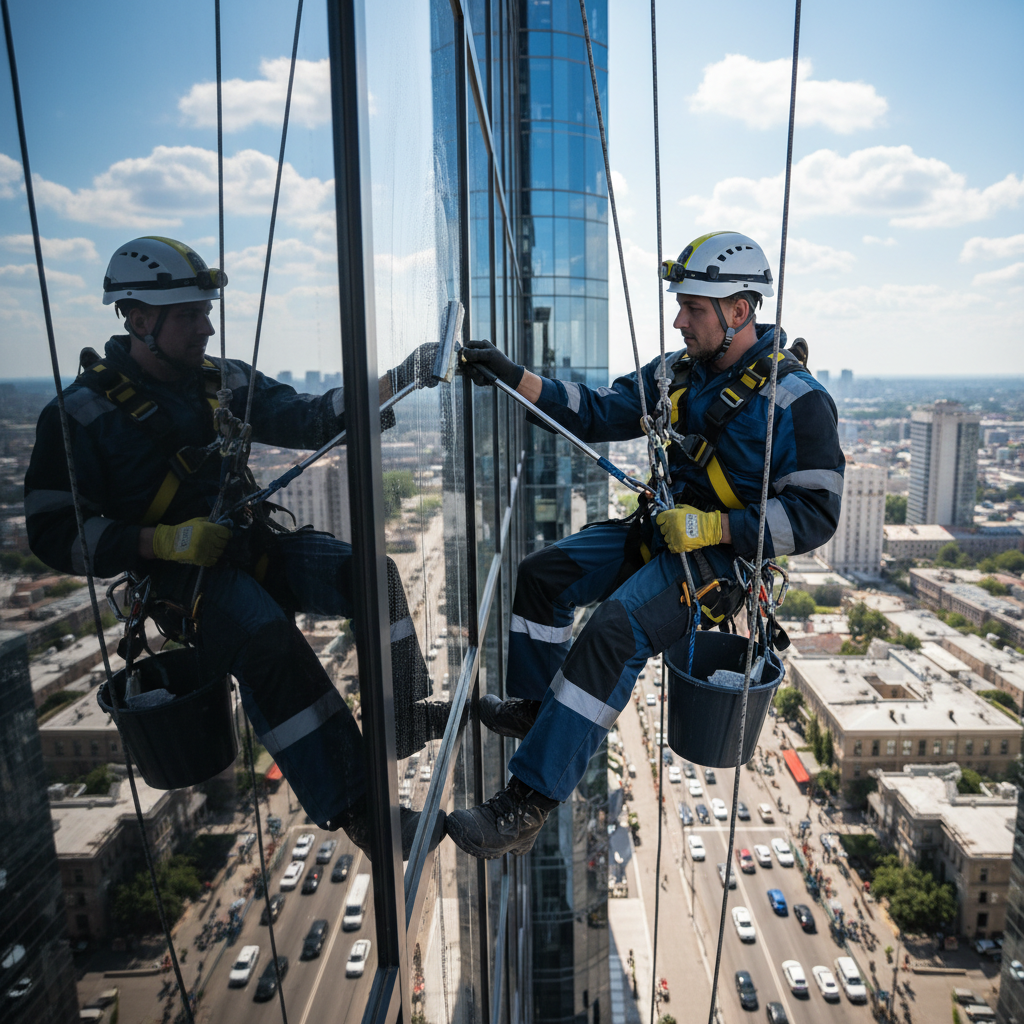
Above the 15th floor, traditional squeegee work becomes a liability — wind load, access angle, and dwell time on the glass all change. Water-fed pole systems fed from a ground unit eliminate the need for rope access on mid-rise facades, but they only perform when the feed water is genuinely pure.
On curtain wall systems — the kind you find on Class A towers along Wilshire and in Century City — the panel geometry matters. Unitized curtain wall with flush glazing tolerates a wider brush head than stick-built systems with exposed mullions. We map every facade before we quote it.

Dr. Yuki Tanaka
M.S. Applied Chemistry, UCLA · Water Treatment Specialist
Why Zero-TDS Pure Water Leaves No Mineral Deposits
Los Angeles municipal water carries 300–500 parts per million of dissolved minerals — calcium, magnesium, silica. When that water evaporates on glass, the minerals stay. On a south-facing tower with full solar exposure, you can see new spotting within 48 hours of a standard wash.
Reverse osmosis followed by deionization brings water to below 10 ppm TDS — ideally 0. At that level, the water is chemically hungry: it wants to grab minerals, not leave them. It pulls residue off the glass and takes it down with the runoff. No surfactants, no squeegee marks, no streaks.

Renee Okafor
PMP Certified · 600-Unit Tower Phasing Specialist
Phasing a 600-Unit Residential Tower Without Disrupting Tenants
The moment you deploy a crew on a residential high-rise, you are a guest in someone's home. Our phasing protocol starts 90 days before mobilization — building management gets a floor-by-floor schedule, residents get 72-hour and 24-hour notices, and we coordinate with concierge on access windows.
We never work before 7 a.m. or past 5 p.m. on residential floors. We stage equipment in designated zones that don't cross lobby traffic. On the Wilshire Corridor, we've run simultaneous rope access and water-fed pole operations on the same tower using a split-zone approach — rope crew on the north face while WFP handles the podium south glass.
Free Resource
The High-Rise Glass
Care Guide.
A 28-page technical reference written by our crew — covering curtain wall system types, water chemistry specifications, access method selection, and a seasonal maintenance calendar for Los Angeles coastal conditions.
Curtain wall vs. stick-built system cleaning protocols
TDS threshold specifications by glass coating type
Rope access vs. water-fed pole decision matrix
Tenant communication templates for residential towers
Seasonal schedule for LA marine layer conditions
Glass damage identification and remediation checklist
High-Rise Glass Care Guide
28 pages · PDF · Gleam, 2026
Download the Guide
We send it immediately. No drip sequence, no spam.